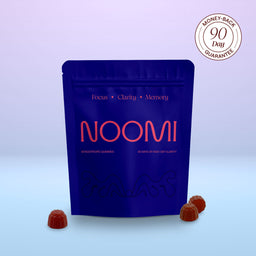
You’re traveling for a conference. Big day. Tight schedule.
Then you realize you forgot your gummies.
The immediate question is simple:
Am I about to crash?
And the bigger question is more serious:
Is this habit creating dependence?
Let’s separate what’s real from what’s internet noise.
“Addiction” vs “dependence”
People use “addicted” to mean “I like it.” That’s not exactly what it means.
- Physical dependence: your body adapts with regular use, and stopping can lead to a withdrawal syndrome.
- Addiction: a pattern of compulsive use despite harm and loss of control (dependence can exist without addiction).
Most “supplement addiction” talk is actually caffeine/stimulants dependence in disguise.
What usually causes a “cliff” when you stop
There are three common reasons people feel a sudden drop when they stop a product:
1) Caffeine withdrawal
Withdrawal from caffeine and other stimulants is a real, well-described syndrome.
Common symptoms include:
- headache
- fatigue or drowsiness
- decreased alertness
- difficulty concentrating
- depressed or irritable mood
- flu-like symptoms (in some people)
If you’ve been taking supplements relying on stimulants such as Cafeine daily and stop abruptly, withdrawal can happen even at relatively low daily intake.
2) Sleep debt you were masking
Caffeine and similar stimulants can keep you going, but they can also reduce sleep.
A controlled study found that caffeine taken even 6 hours before bedtime can significantly disrupt sleep.
So sometimes the “crash” after stopping isn’t the supplement; it’s the sleep debt showing up.
3) You’re returning to baseline
If something was helping, stopping can mean you feel like you did before.
It is not a withdrawal; it is just that you are not being supported anymore.
Where Noomi fits
Noomi is built as a workday routine for focus, clarity, memory, and stress support.
And importantly for this topic: Noomi does not include caffeine or any stimulant.
Noomi's formulation is focused on clean, transparent and healthy adaptogens.
That matters because caffeine is one of the most common drivers of:
- jittery “up”
- late-day “down”
- withdrawal when you stop
So if you stop Noomi, the “classic stimulant cliff” is less likely to be part of the story unless you’re also changing your caffeine intake from other sources.
“Are nootropics addictive?” The honest answer
For most supplements, the bigger risks are usually:
- side effects
- interactions with medications or conditions
- long-term safety gaps
Not addiction.
But you should not accept blanket claims like “non-addictive” as if they’re proven facts for every ingredient, at every dose, in every person. For many natural health products, research focuses on outcomes and short-term safety, not dependence testing.
So the honest framing is:
- Addiction (loss of control, compulsive use despite harm) is not what most people are describing when they talk about supplements.
- Physical dependence + withdrawal is common with some substances (caffeine is a frequent example), and withdrawal syndromes are the defining feature.
- For herbal adaptogens and amino-acid supplements, what we can say confidently is usually about safety, interactions, and duration studied, to ensure they bring the expected benefits without hidden caveats.
What to expect if you stop Noomi
In the first few days
You may notice:
- nothing
- or a subtle drop in “smooth focus”
- or a return of your usual stress reactivity
If you also change your caffeine intake at the same time to patch up, you might experience being even more on edge/jittery/anxious.
The common mistake: you travel to a conference and forget your Noomi pouch. Don't worry, and be careful not to fall (back) into old/bad habits to compensate. You will pay for them later.
Over 3-4 weeks
This is where some people notice the difference more clearly, because:
- day-to-day variance increase
- routines normalize, brain fog and weakened resilience settle in
- your baseline becomes obvious again
A common pattern:
- When you’re on a consistent routine, you feel “stable", sharp.
- When you stop, you realize how often you were scattered or mentally fatigued.
- You are brought back in reactivity mode, with difficulties in finding the focus, clarity and calm to tame the pressure, decision making, and deliveries.
That’s not proof of a biological dependence. It’s a workflow signal.
If you have to stop suddenly
You forgot your gummies. Tomorrow matters.
Here is what to do:
-
Keep caffeine stable
-
- Don’t “compensate” with way more caffeine than usual.
- Don’t quit caffeine cold turkey right before an important day unless you already know you tolerate it well (withdrawal is common).
-
Protect sleep tonight
-
- Caffeine can disrupt sleep even hours before bed.
- If tomorrow matters, treat sleep as the real performance enhancer.
-
Use a simple focus protocol
-
- 60–90 minute deep work block
- short break - ideally a walk, and some water
- repeat
- remove obvious distractions (phone out of reach)
-
Don’t change five variables
If you also change diet, training, caffeine, and sleep schedule, you won’t learn anything about what Noomi was doing for you.
Should you taper, cycle, or take breaks?
This depends on what you’re trying to learn.
If your goal is “Do I notice a difference?”
The way we run the experiments when we built the formulation is as follows:
- 8 weeks of consistent use (cycled during workdays)
- 4 week off (to observe the gaps)
- keep caffeine timing stable
- track metrics easy to quantify (deep-work blocks or end-of-day mental fatigue)
If your goal is “I don’t want to rely on anything”
Then do planned breaks as a lifestyle choice. Just don’t call it “detox.” Call it what it is: preference.
Watch-outs
If you take medications or have specific conditions, your risk is less about “addiction” and more about interactions.
Examples of the type of cautions you’ll see in credible sources:
- If you are going under surgery, you doctor will tell you to avoid supplements. It is normal.
- If you are breast feeding, or taking antidepressant/hormonal therapy, you want to consult with your family doctor before taking Noomi.
Noomi is a Health Canada-approved product that only uses scientifically proven, safe, and easy-to-understand ingredients.
Bottom line
If you stop Noomi:
- The most likely outcome is a return to baseline, not a withdrawal syndrome.
- The biggest “cliff” risk most people fear is usually caffeine withdrawal, which Noomi avoids by design with a formula without any stimulant or padding.
- If you want certainty, run a simple on/off test with stable caffeine and one tracked metric.
Do you want to know more about Noomi? Here is what to read next.
- Read: Why Noomi: one workday routine for focus, memory, and stress support
- Read: The science behind Noomi: what research can (and can’t) say about focus, memory, and stress
- Read: Why Noomi doesn’t include certain ingredients
Get Noomi
Sources used in this article
- Health Canada — Policy on the distinction between advertising and other activities for health products.
- Ad Standards — Consumer Advertising Guidelines for Marketed Health Products (digital/web included; principles for compliant claims).
- Justice Laws — Natural Health Products Regulations: definition of “recommended conditions of use” (dose, duration, risk info).
- CAMH — Physical dependence definition (withdrawal syndrome; dependence does not imply addiction).
- Szalavitz (2021) — “Drug dependence is not addiction—and it matters” (conceptual clarification).
- NIH/NCBI StatPearls — Caffeine withdrawal symptoms and occurrence.
- Drake et al. (2013) — Caffeine effects on sleep even 6 hours before bedtime (study; open access).
- NCCIH — Ashwagandha safety/interactions; NIH ODS ashwagandha fact sheet (safety duration evidence gaps).
- NCCIH — Rhodiola safety, side effects, interactions.